Entrepreneur, Lacrosse Athlete, Writer & Productivity Nerd. Frameworks & strategies for those who don't want to specialize. Join hundreds of generalists and unlock your full potential. 🔓
The Principle of Least Interest [#144]
Published about 23 hours ago • 6 min read
The Principle of Least Interest [#144]
Whoever can walk away holds the power. Here’s how to be that person.
In high school, I watched a motivational video that changed my life: "How Bad Do You Want It", by Eric Thomas (still one of the greatest motivational speakers of all time, if you ask me).
The gist: "only if you want it as bad as you wanna breathe, then you'll be successful."
I lived and breathed this principle. With some success. I stayed disciplined. I worked hard. When I set my sights on a goal, I usually achieved it.
At least as long as I was in control of achieving it.
Because over the years, I realized that wanting it badly doesn't get you there when other humans are involved. Counterintuitively, it might be the precise reason that stops you.
So today, let's talk about the Principle of Least Interest (or: why the person who cares less usually wins):
Let's start with my own aha moment:
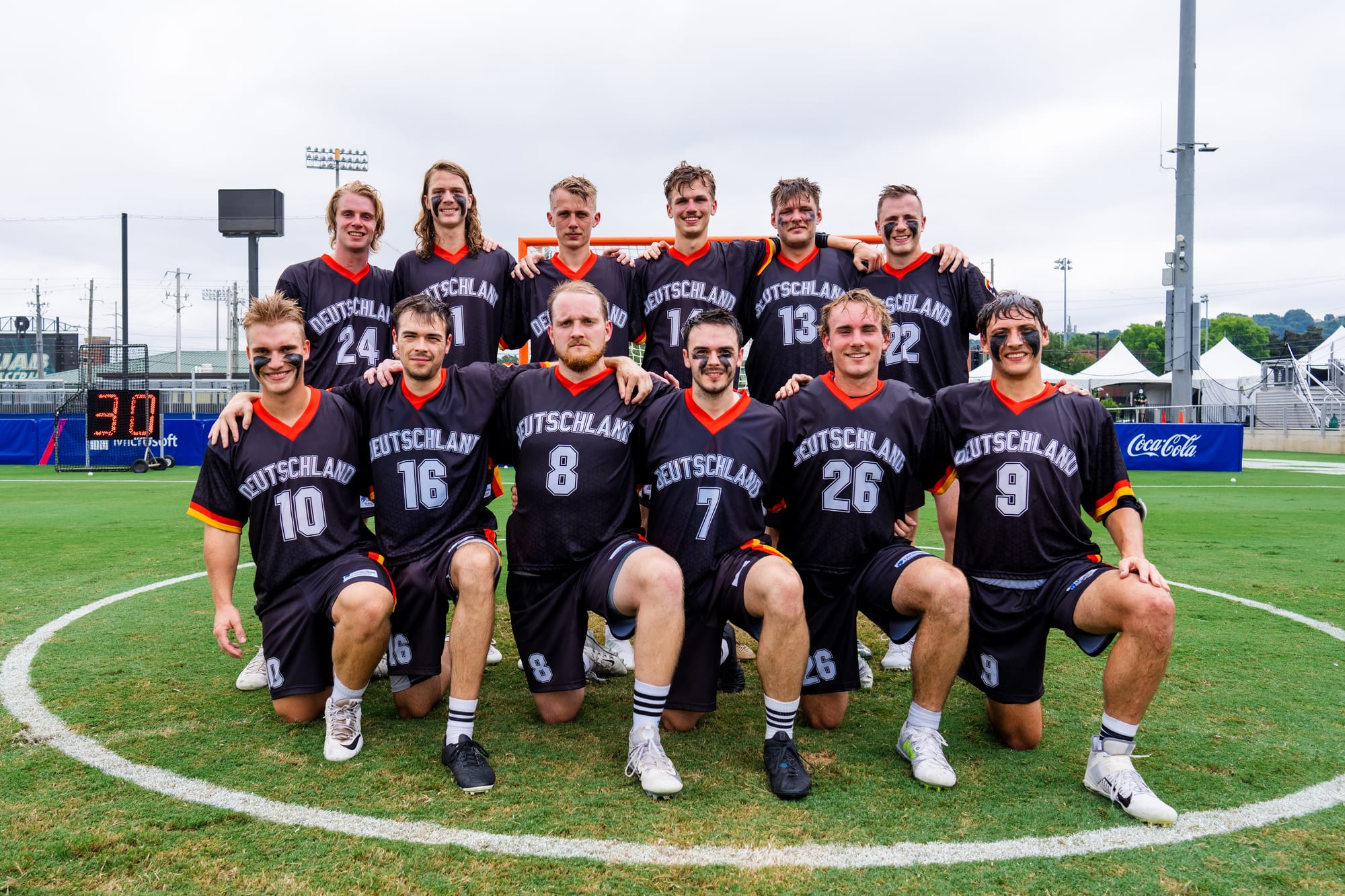
In 2022, I was nominated to represent Germany on one of the biggest stages in lacrosse: The World Games. The top 8 teams in the world, and I was one of 12 guys selected to the roster:
fantastic group of guys (miss you, Lenny – rest in peace)
At the time, I didn’t think much of it. The discipline was Lacrosse Sixes, a new way of playing the sport (akin to Rugby 7s) designed to meet the requirements for becoming an Olympic sport. (Which, btw, worked: lacrosse will be in the 2028 Olympics!)
Given how new the discipline was, not that many players tried out – particularly defensive players, who in field lacrosse get to work with a long stick, but in sixes also have to use a short stick. I was just having fun. Then, while waiting for takeoff on a plane, I got the message that I'd been nominated.
I was surprised, but ecstatic. The thing I'd worked towards for so long had finally materialized – just not in the discipline I'd wanted (field lacrosse).
So the year after, I thought: this is it. Now I'm gonna make the field roster. I worked hard. Attended every camp, even when injured. Hired a personal trainer. Competed everywhere I could.
And then I got the message that I'd been cut from the final roster.
Why? My best guess: I wanted it too badly. My focus narrowed. I was too tense ("verbissen", as you'd say in German), afraid of making mistakes, not playing loosely. And that prevented me from getting what I wanted most.
Meanwhile, some of the guys who made the roster barely showed up to practice and didn't work nearly as hard – but played pretty well at the camps … because they didn’t need to be on the team. For them, it was just a nice-to-have.
Exactly like Sixes had been for me a year earlier.
I wanted it as badly as I wanted to breathe. And precisely because of that, I failed.
I'm not the only one who's noticed this. Sociologist Willard Waller described the "Principle of Least Interest" back in 1938 while studying courtship: in any relationship, the person who cares less holds more power.
Power comes from dependence. If you need something more than I do, I have leverage. I can walk away; you can't.
Willingness to walk away is the #1 lever you can pull to get what you want.
And once you see it, you see it everywhere:
In negotiations, the party with the better BATNA (= best alternative to a negotiated agreement) usually comes out on top.
The #opentowork banner on LinkedIn is a turnoff for many hiring managers. They don't wanna hire someone desperate for a job. But if you're employed at a hot firm, expect recruiters to line up for you.
Closing the first client – the one you desperately need – is a struggle. I needed a case study so badly at Generalyst that I charged only €1,000 for my first hire. Now, I charge ~15x that and have more mandates than I can fill – so sometimes I'll even reject a client, and I barely ever give discounts.
Startups that really need investment often struggle to raise; startups that are doing well have investors lined up and can set their own terms.
When I've been in relationships, I've noticed that all of a sudden, attractive women found me suspiciously interesting. Much more so than when I was single. Odd, isn't it?
OK. So neediness costs you. How do you fix it?
Quick break to showcase two things my friends have built:
Chiara just launched a newsletter called Notes from Europe: for everyone looking to discover our beautiful continent through a unique lens, this is going to be a fantastic publication. You should also check out her page about moving to different cities called newintown.
Patrick just launched his new business, Pidgeon: mailboxes for AI Agents. So that your agent can also receive this newsletter. (Disclosure: I'm an investor.)
1/ Build alternatives
BATNAs work in most contexts:
In your job, take a few interviews here and there to build a network of people looking to hire you – and to properly gauge your market value. Companies and markets can shift quickly. This shouldn't be your main focus, but saying yes to a recruiter here and there won't hurt.
In startups, get to profitability as fast as possible. From there, you're not dependent on investors, and you set the terms.
In sales, always generate pipeline – so you can say no to an unfavorable deal, or to a discount if the client keeps pushing. If they wanna pay less, cool, they can work with another provider.
In dating, the best advice I've seen (and followed) is to build a life where a partner isn't the missing piece of the puzzle – but a welcome addition to an already awesome life.
Alternatives are the external fix. But sometimes the dependence is baked into how you earn a living:
2/ Cut your dependence on a single outcome
"The three most harmful addictions are heroin, carbohydrates, and a monthly salary." – Nassim Taleb
If you depend on one salary and don't have another job lined up, your employer holds leverage over you.
Even worse: when you're unemployed with no other income, you have to accept any conditions (assuming you even get an offer in the first place).
Better to diversify. With several income streams, one can go away without scaring you. That's why I'm a huge fan of portfolio careers.
I've also – unintentionally – put myself in a good position with Generalyst: since the roles I fill are usually one-offs, I have to build a large client portfolio. Which is good: if a client wants special treatment, I can just refuse, because there are plenty of others.
Which leaves the most difficult one – the dependence that lives in your head:
3/ Separate identity from outcome
Part of why getting cut in 2023 was so crushing: I'd made "German National Team Player" a huge part of my identity. So when it didn't happen, I lost part of myself.
Now I still talk about it, but differently: I'd love to be on the roster again, but if I don't make it, that's okay – I've got so many other cool things in my life that being cut would simply free up time for other pursuits.
Most founders operate the way I did: since the only thing they do is work on their startup, their identity is tied to it.
When the startup is doing well, they're doing well. When the startup struggles, they struggle.
Whenever you're ready, there are a few ways we can work together:
Know someone that'd benefit from also enrolling in Personal Productivity OS? Become an affiliate, get your friend(s) a discount and make money in the process.
Who's the best commercial generalyst you know (besides yourself, duh)? Send them this link – would love to have them on my next cohort.
And if you know of a startup that's hiring for generalist positions in mainland Europe, drop me a hint :)
Check out my archive of more than 100 posts on career building, productivity, personal reflection and everything in between.
And lastly, if my work has helped you land a better job, improve how you work, or think differently about your career, consider becoming a supporter. I'd be eternally grateful.
Finding success as generalist in a specialized economy
Entrepreneur, Lacrosse Athlete, Writer & Productivity Nerd. Frameworks & strategies for those who don't want to specialize. Join hundreds of generalists and unlock your full potential. 🔓